
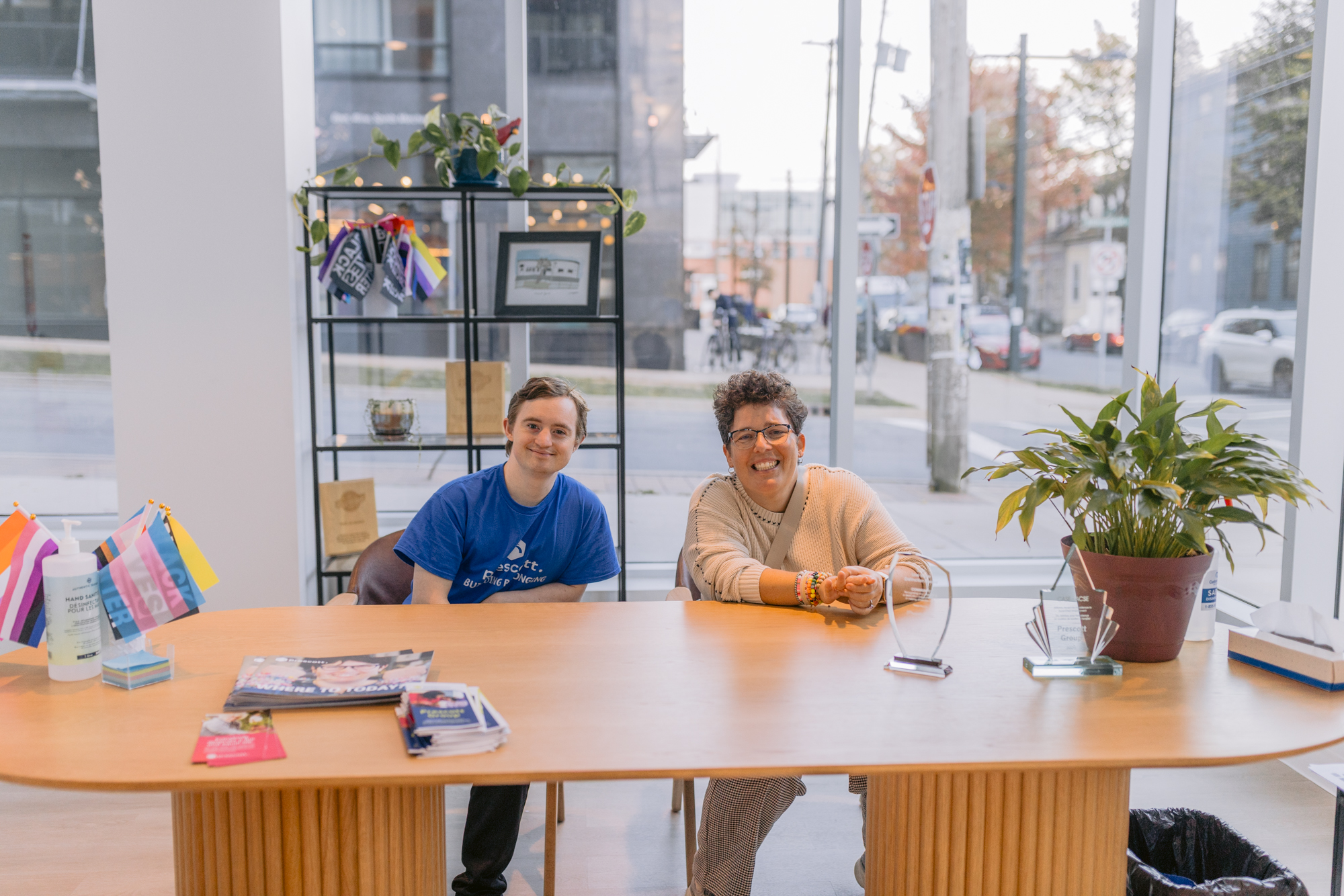
Why community spaces matter – and why first-voice spaces matter even more
Across Canada, initiatives like Integrated Youth Services have shown the power of bringing people, services, and community together in one place. When spaces are welcoming, easy to access, and built around real lives, people are more likely to connect, find support early, and feel part of something bigger
Community spaces matter because they reduce barriers. They make it easier to meet people, try new things, and access supports without having to navigate complex systems. They create a sense of belonging – something that is fundamental to well-being, confidence, and participation in everyday life.
But not all spaces are created equal.
For people with intellectual and developmental disabilities, many community environments still require adapting, masking, or relying heavily on others just to take part. That’s why spaces designed with people – not just for them – are so important.
First-voice spaces put people with lived experience at the centre of design, decision-making, and daily life. They shape how a space looks, feels, and works. From layout and lighting to activities and culture, these environments reflect what people actually need to feel comfortable, confident, and included.
The impact is powerful.
When people help create the space, they feel ownership. When a space is easy to navigate and responsive to different needs, it frees up energy for connection, creativity, and growth. When expectations are flexible and people can participate in their own way, confidence builds – and with it, independence.
These spaces don’t just support individuals. They strengthen communities.
They create places where people can form friendships, develop skills, and build natural supports. They open doors to employment, volunteering, and community life. And they shift perceptions – showcasing what can be achieved when people come together.
At their best, community spaces are more than programs or buildings. They are places of belonging, possibility, and shared ownership.
When people with intellectual disabilities are front and centre, the space stops being something people are fitted into and becomes something that prioritizes genuine lived experiences and voices.
To find out more about ways that you can be part of our community hubs, please email info@prescottgroup.ca or check out our volunteer opportunities.